Scientific depth

Peers

For scientific peers, collaborators, reviewers and research partners.

From motion to meaning

Listen to the mechanics before the neurons.

Our work begins where sound becomes force: antennae, membranes and sensory structures moving on microscopic scales. From there, we follow the signal into cells, circuits and behaviour.

Illustrated sensory physiology researcher in a laboratory
Conference exchange

Peer discussion continues beyond the bench.

A grayscale conference scene now sits behind this scrolling window: neuroscientists discussing a poster while other attendees pass through the background. As you scroll, the foreground window stays with you while the larger image shifts more slowly behind it, revealing different parts of the same moment.

↓ Keep scrolling to reveal more of the scene
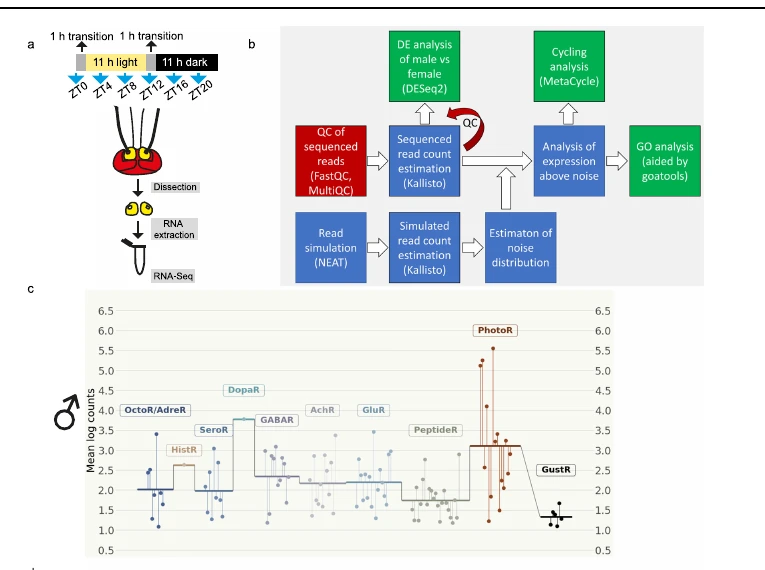
Placeholder research figure from an Albert Lab publication
One question, several scales

Why does a tiny ear behave like an active machine?

We combine quantitative mechanics, electrophysiology, imaging, genetics and behaviour. The visual rhythm here is deliberately slower than the foreground text: the scientific object stays in view while the explanation arrives and overlaps it.

Open the evidence trail

Research perspectives

Voices from the lab

Three changing perspectives connect methods, interpretation and collaboration. The editable source is data/quotes.csv.

Keep scrolling for the compact scientific overview.

The sections below remain concise reference points; the scroll story above provides the visual and narrative entry.

Project preview

Current project atlas

Moving previews for several research directions. These are placeholders for future high-speed footage, microscopy and graphical abstracts.

View all projects
Mosquito hearing
Motion placeholder

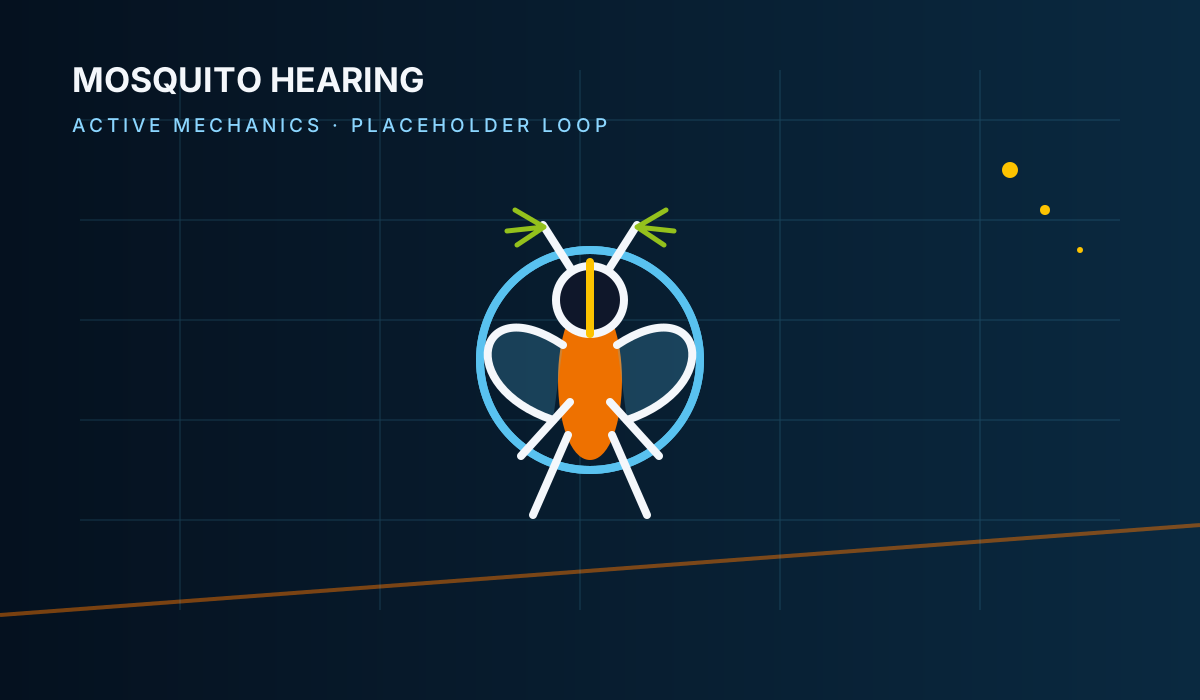
Mosquito hearing

Active mechanics, receptor modulation and sex-specific tuning.

Mosquito hearing
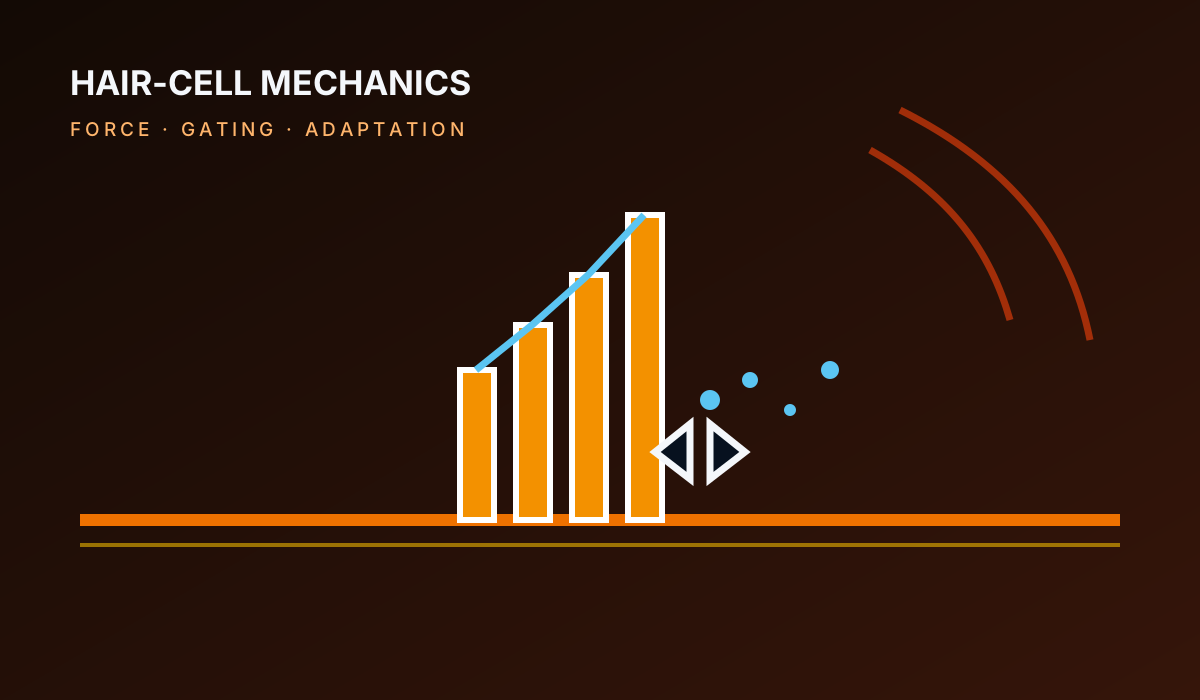
Hair-cell mechanics
Motion placeholder

Hair-cell mechanics

Force, gating and adaptation in sensory cells.

Hair-cell mechanics
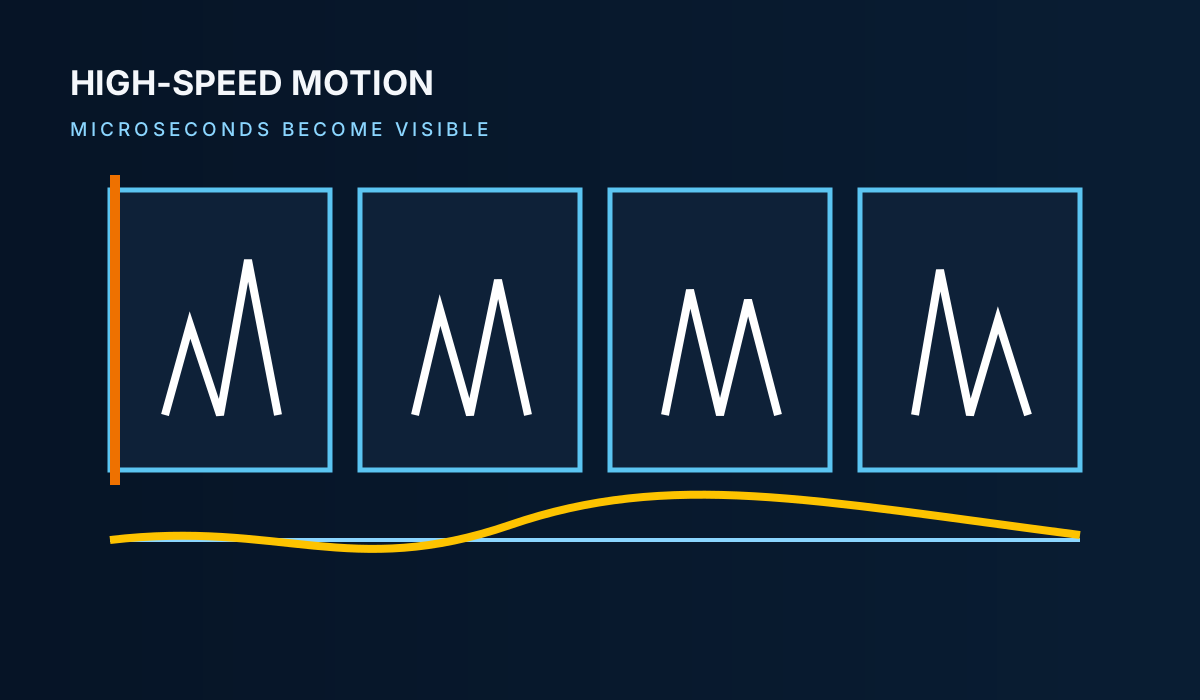
High-speed motion
Motion placeholder

High-speed motion

Making microsecond-scale movement visible.

High-speed motion

Research pillars

Replace these concise placeholders with final lab text, grant-specific language or project abstracts.

Auditory transduction

From vibration to neural signal

We investigate how mechanosensory structures convert minute mechanical displacements into cellular and neural responses.

Insect ears

Drosophila and mosquito audition

Genetically tractable antennae and Johnston’s organ systems provide access to mechanics, molecules and behaviour.

Comparative sensory biology

Model systems across scales

We use diverse organisms and methods to ask how physical signals are detected, filtered and transformed.

Current focus

Dense, peer-facing summaries can link directly to preprints, methods, datasets or contact people.

model organism

Drosophila hearing

Active antennal mechanics, neuronal transduction and genetic perturbation.

behaviour

Mosquito audition

Wingbeat tones, attraction behaviour and sensory ecology.

translation

Auditory ageing

Mechanisms and phenotypes relevant to age-related sensory decline.

Calcium imaging setup as a 3D Gaussian-splat preview

For collaborators and researchers

Inspect the experimental environment

Explore how the calcium-imaging instruments are arranged in space before discussing protocols, adaptations or collaborations.

Gaussian SplatCalcium imagingLocally hosted
Enter the 3D Lab Tour