Research project

Larval lch5 mechanics

Drosophila hearing

Using the accessible larval lch5 chordotonal organ as a proxy for investigating sensory mechanics and mechanotransduction.
Project overview

At a glance

Using the accessible larval lch5 chordotonal organ as a proxy for investigating sensory mechanics and mechanotransduction.

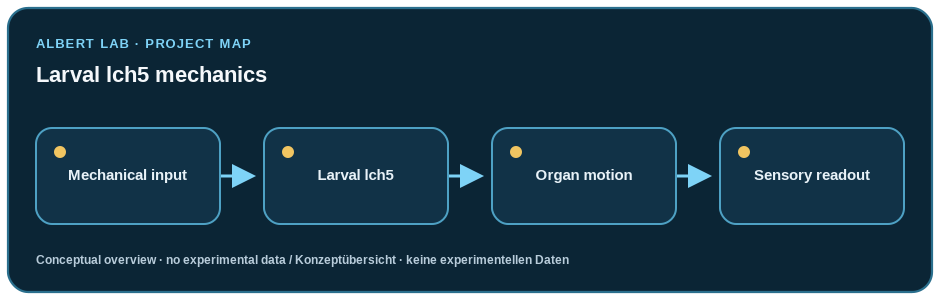
Concept overview for Larval lch5 mechanics
Conceptual overview — schematic only, not experimental data.

Research question

What can the accessible larval lch5 chordotonal organ reveal about sensory mechanics and mechanotransduction?

Approach

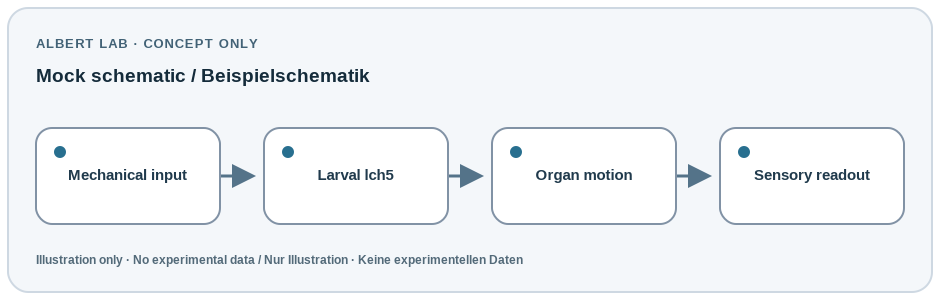
A possible study would apply a controlled mechanical stimulus to the larval organ, resolve its motion and compare that motion with an appropriate sensory readout.

Programme
Drosophila hearing
Model organisms
Drosophila melanogaster
Related methods
3 · Jump to methods
Publications
1 · Jump to linked papers

Research question

Research question

What can the accessible larval lch5 chordotonal organ reveal about sensory mechanics and mechanotransduction?

Approach

Approach

A possible study would apply a controlled mechanical stimulus to the larval organ, resolve its motion and compare that motion with an appropriate sensory readout.

Methods & resources

Techniques

Methods

Related methods

  • Laser Doppler vibrometrymechanics

    Non-contact measurements of nanometre-scale vibrations in antennae, chordotonal organs, hair bundles and other sensory structures.

  • Electrophysiologyphysiology

    Patch clamp, extracellular recordings and mechanically evoked responses to connect force, motion and electrical signalling.

  • Precision mechanical stimulationstimulation

    Fluid jets, piezo-driven probes and calibrated mechanical stimuli for controlled excitation of mechanosensory systems.

Next steps

Next steps

A next planning step could choose a repeatable stimulation geometry and a paired mechanical or physiological measurement.